
Jack Parsons developed solid rocket propellants that powered early JATO units and influenced Polaris
arsons Rockets isn't a name you hear every day, yet its fingerprints are all over modern aerospace. Jack Parsons, a self-taught chemist and one of the founders of the Jet Propulsion Laboratory。developed solid rocket propellants that powered early JATO (Jet-Assisted Take-Off) units and laid groundwork for the Polaris missile program. His story—equal parts genius, recklessness, and occult obsession—makes Parsons Rockets a fascinating case study in how individual brilliance can shape an entire industry, even if the name itself fades from public memory.Walk through the archives at Caltech and you'll find Parsons' test logs from the 1930s. The numbers tell a story of trial and error: early rockets that exploded on the stand, propellant mixtures that turned to sludge, and a group of amateur enthusiasts—Parsons, Frank Malina。Ed Forman—who essentially invented American rocketry in a gully near the Arroyo Seco. Their work on Parsons Rockets wasn't glamorous. It was messy, dangerous, and often funded by whatever they could scrape together. But those experiments proved that solid propellants could be controlled, throttled, and trusted. That insight alone changed military and spaceflight logistics forever.What strikes me about Parsons Rockets is the contrast between the precision of the engineering and the chaos of Parsons' personal life. He was a devotee of Aleister Crowley, performed rituals in his Pasadena home, and once tried to summon a goddess using rocket fuel as an offering. Some dismiss this as eccentricity;I see it as a window into how creativity in rocketry often comes from minds that don't fit neat categories. The same man who calibrated burn rates with a slide rule also wrote poetry about Babalon. That duality doesn't diminish his technical contributions—it humanizes them. Parsons Rockets succeeded because Parsons himself refused to separate the rational from the mystical, the lab from the living room.The commercial and military legacy of Parsons Rockets is concrete. His propellant formulations, particularly the asphalt-based and later polysulfide rubbers, were direct ancestors of the solid boosters used on the Space Shuttle and the Minuteman missiles. When you watch a modern rocket lift off, you're watching combustion chemistry that Parsons helped tame. Yet the company he co-founded, Aerojet, eventually absorbed his patents and moved on. Parsons died in 1952 in a laboratory explosion—a fitting, if tragic, end for a man who lived with volatile materials daily. His name rarely appears in corporate histories。but the engineering principles he championed remain embedded in every solid rocket motor that leaves the launch pad.
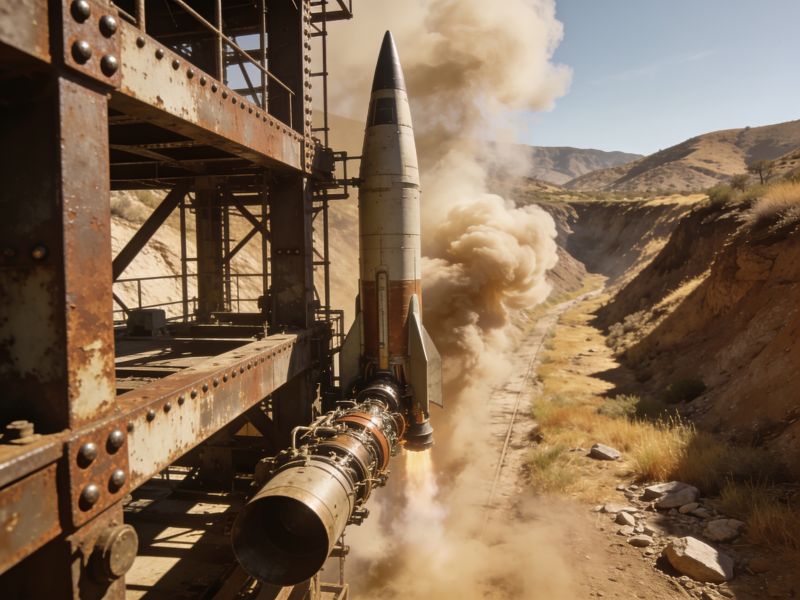
Parsons Rockets deserves more than a footnote in aerospace history. The next time you see a JATO bottle on a vintage aircraft or read about solid rocket boosters, remember the guy in the trench coat mixing chemicals in a California gully. His work wasn't polished or institutionally backed—it was raw, iterative, and deeply personal. That's why Parsons Rockets still matters: not because of the man's mystique, but because the hardware he built actually flew. In an industry obsessed with legacy。Parsons left behind a blueprint for how obsessive curiosity can overcome a lack of formal credentials. That's a lesson worth repeating, even if the name Parsons Rockets never makes it onto a corporate logo.